
YOSEMITE – Yosemite National Park closed out 2025 with a story shaped not by luck, but by people — the rangers, trail crews, Tribal partners, scientists, volunteers, and visitors who, day after day, sustain one of the most iconic landscapes in the world. And for the residents of the mountain communities surrounding Madera County,
many of whom live within an hour of the park’s gates, this year’s accomplishments also represent investments in the broader Sierra Nevada region.
Park officials and the Yosemite Conservancy released a detailed annual summary outlining major conservation gains, visitor-service improvements, and cultural initiatives. While staffing shortages and several year-end operational disruptions created headwinds, Yosemite’s teams pressed ahead, completing critical projects that will directly influence how local residents experience the park in the coming years.
Major Trail Rehabilitation Across the Sierra High Country and Yosemite Valley
Trail conditions are often the first thing locals notice on their weekend hikes, and 2025 saw heavy investment in maintenance and restoration. Crews completed repairs on some of the Valley’s most iconic routes — including the Nevada Foot Trail, the Mist Trail approaches, the Horse Trail below Vernal Fall Bridge, and the Upper Yosemite Falls Trail.
The Conservancy also funded more than fifteen California Conservation Corps youth crew members who worked across highly trafficked loops such as Mirror Lake, the Valley Loop, and the challenging Tenaya Zig-Zags. Farther north, park crews wrapped up significant rehabilitation on 17.5 miles of the Pacific Crest Trail between Dorothy Pass and Stubblefield Canyon, improvements that backpackers will appreciate next summer.
Wildlife Management: A Strong Year for Sierra Species
Local residents often feel a personal connection to Yosemite’s wildlife, and 2025 brought meaningful progress for several species. Park biologists completed a successful translocation of four pregnant Sierra Nevada bighorn sheep ewes, all of whom gave birth in spring. The park also advanced research into its seventeen bat species, an often-overlooked but ecologically important group.
GPS collar monitoring of Pacific fishers continued to reveal valuable migration data, while climber-education efforts helped protect ten peregrine falcon nesting sites. Several endangered amphibians — Yosemite toads, Sierra Nevada yellow-legged frogs, and California red-legged frogs — were reintroduced throughout the Valley, marking another step toward stabilizing sensitive ecosystems.
Habitat Restoration Efforts That Reach Beyond Park Boundaries
Large-scale restoration projects matter for Madera County residents because healthier headwaters and meadows upstream support better watershed resilience downstream. The ongoing restoration of Ackerson Meadow continued with invasive-plant removal, species monitoring, and extensive revegetation.
“Keep it Wild” crews maintained more than 1,000 backcountry campsites and removed miles of unofficial trails, and park staff completed both a 3,912-foot trail reroute and nearly 630 feet of meadow restoration at Kerrick Meadow. A long-running revegetation effort at Tenaya Lake was also completed with the planting of more than 2,500 native plants. In Yosemite Valley, researchers used a new prescribed-fire demonstration area to monitor how cultural burning affects significant plant species.
Scientific Research Keeps the Park’s Management Adaptive
The park’s Human-Bear Management team reported only 34 bear incidents in 2025 — a dramatic reduction of 99 percent from 1998. For residents accustomed to seeing seasonal advisories about food storage outside the park, this continues a long-term success story in coexisting with regional wildlife.
Yosemite also deployed more than fifty License Plate Reader cameras across fourteen locations to study traffic movements and compare them to entrance reservations. The data will inform future vehicle management strategies — particularly relevant for mountain residents who rely on predictable access during peak visitation periods.
Cultural Preservation and Indigenous Stewardship Grow in Visibility
Yosemite added new cultural programming this year, hosting six Indigenous cultural demonstrators at the Yosemite Museum and Indian Village. Five major cultural events — including the Parsons Memorial Lodge Summer Series and the Obata Art programs — reached nearly 10,000 attendees.
The park expanded its mounted patrol by adding a mule and a horse, while several longtime patrol animals retired to homes in the gateway community of Mariposa. Meanwhile, the all-Indigenous Yosemite Ancestral Stewards crew continued its work restoring meadows, reducing fuel loads, and protecting archaeological sites.
Visitor Services, Volunteerism, and Youth Programs Flourish
Climbers and families alike saw substantial program growth. More than 1,500 volunteers participated in climbing stewardship programs, and more than 20,000 visitors interacted with the Ask a Climber team at El Cap Meadow.
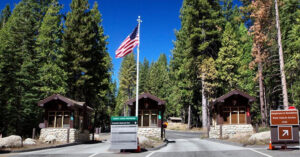
The park also piloted a new reservation system designed to reduce wait times and improve entrance-gate efficiency. Families enjoyed pollinator-focused “Ranger Buzz and Butterflies” programs, and rangers released two new Yosemite Nature Notes films featuring winter in Tuolumne and the Yosemite Toad.
Youth engagement remained a major highlight of the year. More than 15,000 young visitors earned junior ranger badges, while programs such as WildLink and Adventure Risk Challenge provided hundreds of local and Central Valley students wilderness expeditions and skill-building opportunities.
What It Means for Madera County Residents
For local mountain communities like Oakhurst, Bass Lake, Coarsegold, and North Fork, Yosemite remains both an economic anchor and an extension of home. The park’s 2025 progress supports local businesses, outdoor education programs, and the overall health and resilience of Sierra Nevada ecosystems. Even with operational challenges, Yosemite’s teams prioritized long-term sustainability — investments that will benefit residents who visit often, work in gateway industries, or simply value living near one of the world’s most celebrated natural spaces.
If this year’s recap is any indication, 2026 will bring continued focus on trail quality, cultural collaboration, and science-driven management — all vital threads in the story of a park that belongs not just to the nation, but to the communities that live alongside it.
Native American Tribe Reclaims 900 Acres Of Yosemite