
This article appeared in the Yosemite Conservancy 2025 Spring/Summer Magazine.
Read all their magazines here.
YOSEMITE, CA – A quiet transformation is underway in Yosemite Valley — one that promises to restore not just the landscape, but the deep-rooted relationship between people and fire.
The Little Fires project, a Tribally driven, multiyear initiative funded by Yosemite Conservancy donors, is reintroducing cultural burning practices to the park. Using the same traditions and techniques that Native people used to tend these lands for millennia, Little Fires will focus on small areas with low-intensity fire. Though it’s starting as a pilot program, project leaders hope it creates a foundation for a lasting paradigm shift.
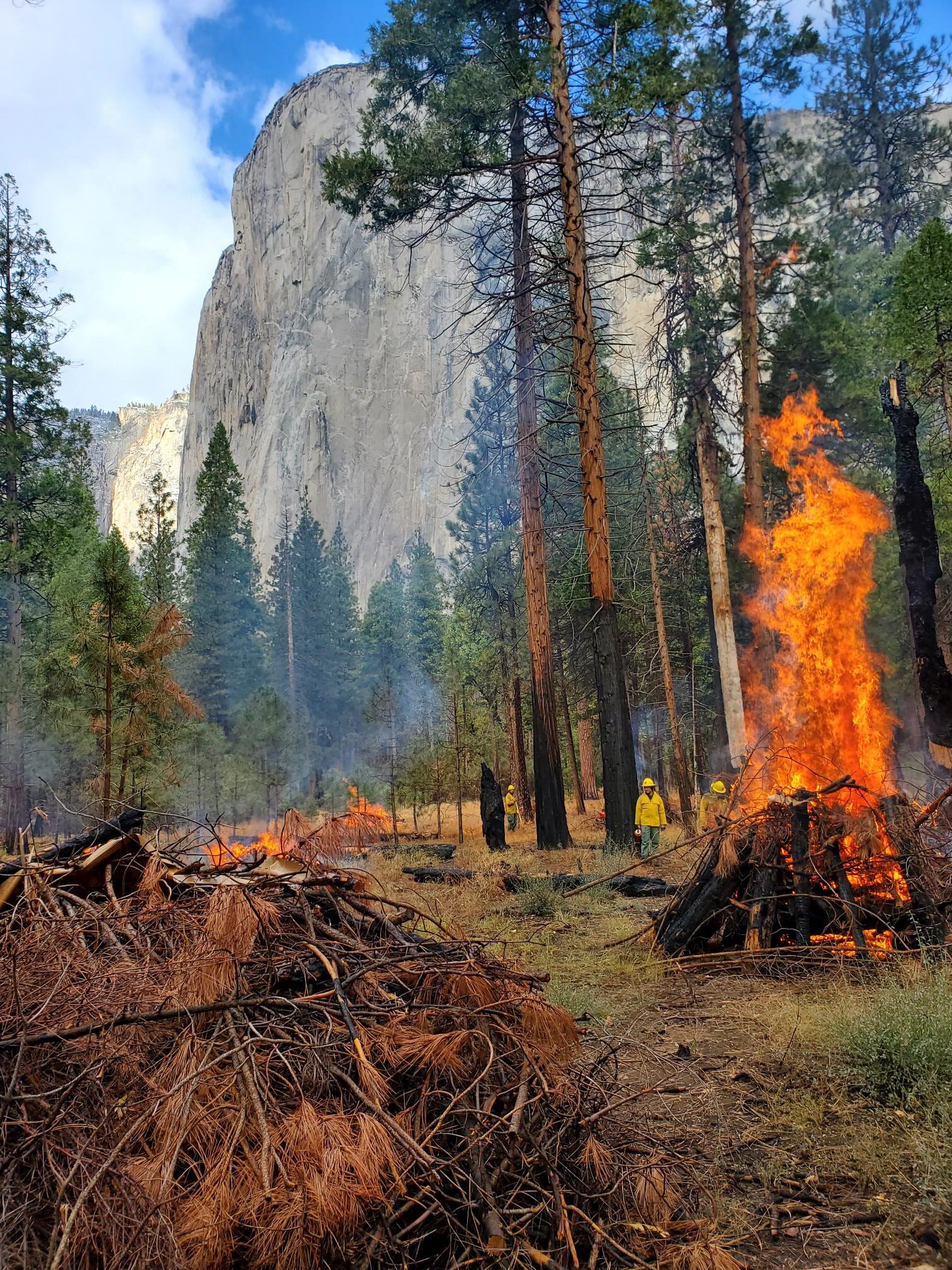
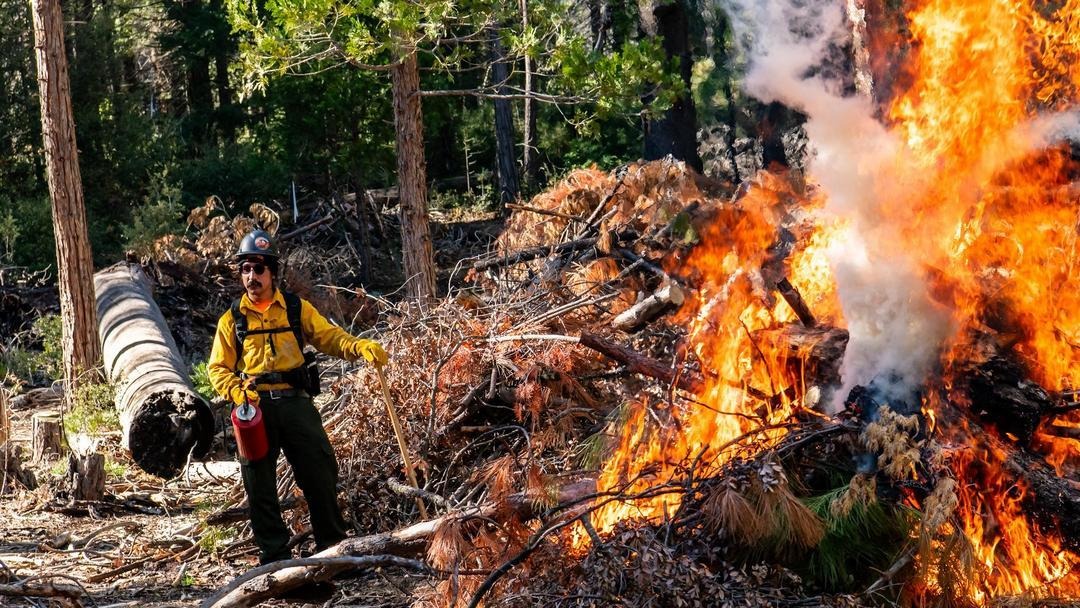
Carefully constructed piles of wood and brush — aka burn piles — are strategically burned in Yosemite Valley to reduce wildfire risk. Photo courtesy of the National Park Service.
“For over a century, we’ve suppressed fire; but fire is the Sierra Nevada’s natural recycling mechanism,” explains Garrett Dickman, a forest ecologist and National Park Service branch lead for vegetation and ecological restoration in Yosemite National Park.
“Without it, dead material has stacked up like tinder. In the most fuel-loaded locations, it can get to be so much, it’s like the equivalent of stacking six [Boeing] 737s. It’s just energy waiting to burn.”
The consequences have been catastrophic: high-severity wildfires that devastate forests, destroy wildlife habitat, and threaten communities. But Little Fires takes a different approach. It centers Native knowledge and leadership, placing crews from local Tribes — people whose ancestors have spent millennia tending these lands — at the heart of forest stewardship. Rather than viewing fire as a threat, these teams are trained to wield it as a tool of care — clearing fuels, reviving traditional plants, and healing the land.
“This isn’t just restoration of the land; it’s restoration of the people,” Dickman says. “That relationship between land and people, with fire as the connecting thread, has been here since time immemorial.”
Irene Vasquez, a Southern Sierra Miwuk Tribal member and cultural biologist formerly with Yosemite National Park and now with the Great Basin Institute, puts it more personally: “Fire is good for us — our hearts, our health, our food. It’s spiritual, physical, cultural. These plants evolved with people. And people evolved with fire.”
“This is about regenerating that relationship [with fire], not just for us, but for future generations.” Irene Vasquez, Southern Miwuk Tribal Member
Vasquez notes the long history of Native people tending to the plants and the critical use of fire to cultivate foods and strengthen crops, such as acorns, on which local animals rely. Fire, she says, is “needed to make food healthy again. To make us all — humans and our non-human relatives — healthy again. And to remind us that people are part of this landscape, too.”
For Tribal communities, fire is not only ecological, but deeply cultural. Many species — such as black oaks, willow, and deer grass — depend on regular, low-intensity burns to thrive. Those burns, in turn, support traditional foodways, medicine, basket-making materials, and ceremonies. “This is the kind of burning we don’t normally do in Yosemite,” Vasquez explains. “We don’t burn to reduce acorn pests. We don’t burn to renew straight willow shoots for baskets. But now, we can.”
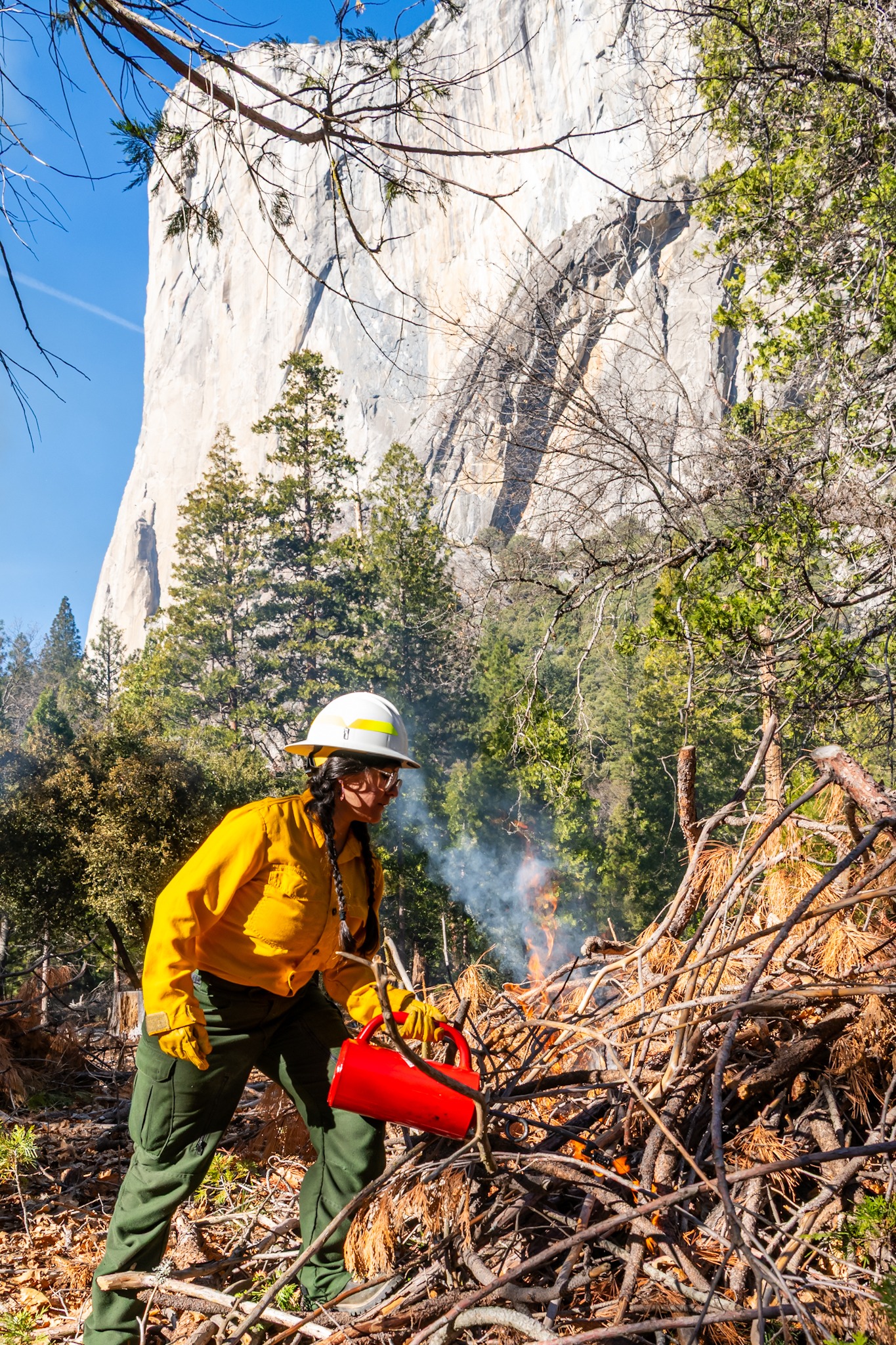
In the fall of 2025, a Southern Sierra Miwuk Nation Meh-su crew member ignites a burn pile at one of the park’s first cultural burns in over two decades. Photo courtesy of Luke Schaftary.
What makes Little Fires different is the structure: Tribal crews aren’t just participating; they’re leading. While federal compliance still applies, the program is designed to reduce bureaucratic delays and place decision-making power in Native hands.
As Dickman notes: “We’re not trying to run a project. We’re building a program. And in time, we want it to be fully Tribally led.” That leadership includes more than just technical training. It’s about restoring generational knowledge and connection.
“People used to have fire every day — cook fires, ceremonial fires. We lived with fire,” Vasquez says. “This is about regenerating that relationship, not just for us, but for future generations.”
It’s an issue she thinks more about since she became a mother. “I used to do this cultural work for my grandma and my elders,” says Vasquez, whose son was born in 2023. “But now it’s shifted. Now I’m thinking more about the future generations, and it gives me more reason to keep it going.”
The work isn’t quick or easy. Fire suppression during the past century created a dangerous backlog of fuel. Healing will take time — decades, maybe more. “It’s like peeling back layers,” Dickman says. “We start with needles and sticks, then branches, then logs. Some places need heavy machinery. But everywhere else, we’ll use fire.”
And fire, when used right, gives back. “We’re finally meeting our mission — restoring natural and cultural resources, unimpaired, for future generations,” Vasquez says.
Perhaps most importantly, Little Fires reflects a larger shift: away from a one-size-fits-all approach to fire management, and toward one rooted in place, people, and long-standing knowledge. “Fire looks different everywhere,” Dickman says. “Yosemite fires aren’t Southern California fires.”
Vasquez agrees. “Cultural fire isn’t wildfire,” she says. “It’s tended. It’s intentional. It’s medicine.”
As Tribal crews began their fieldwork late this summer, and the first cultural burns in two decades start this fall, a new narrative is taking hold in Yosemite — one where fire is not just a force to fear, but a partner in healing. Not just a tool of destruction, but of renewal.
Yosemite Wildlife: Stunning Celebration Of The Park’s Fauna