

BASS LAKE, CA – It’s time for the shoreline of Bass Lake to make its annual transformation. Boats return to the water, families gather along the beaches, and one of Madera County’s most popular summer destinations comes back to life.
But alongside the excitement of the season comes a clear and consistent message from the Madera County Sheriff’s Office: safety on the water is not optional—it’s essential.
A Busy Season on a Popular Lake
Bass Lake is more than just a scenic getaway. Stretching roughly 4.5 miles long and lined with coves, bays, and designated recreation areas, it offers opportunities for boating, fishing, swimming, and paddling throughout the summer months.
Its accessibility—just a short drive from the Central Valley and the gateway to Yosemite—makes it a magnet for both locals and visitors. With that popularity comes increased congestion on the water, particularly between Memorial Day and Labor Day, when boating traffic is at its peak.
To manage that surge, the Sheriff’s Boat Unit patrols the lake seasonally, providing enforcement, emergency response, and public education.
Specialized Patrol on the Water
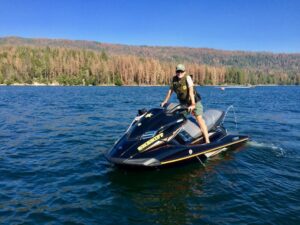 Unlike traditional law enforcement assignments, the Boat Unit operates in a highly specialized environment. Deputies are trained in boating safety, navigation law, and emergency response, allowing them to handle incidents that range from routine compliance checks to life-threatening emergencies.
Their responsibilities include enforcing a wide spectrum of regulations—from local county ordinances to state and federal boating laws—and responding to accidents, injuries, and water rescues. When needed, they also assist with search and rescue operations, including dive team deployments.
This presence is especially critical during the summer months, when increased activity raises the likelihood of collisions, unsafe operation, and alcohol-related incidents.
Education as Prevention
While enforcement is visible on the water, one of the Boat Unit’s most important roles happens before problems occur.
Through outreach events, safety materials, and direct interaction with boaters, deputies emphasize safe and sober operation. That educational approach has contributed to measurable improvements in recent years, including reductions in both boating under the influence arrests and fatal accidents.
At its core, the message is simple: most incidents are preventable.
Understanding the Rules Before You Launch
For anyone planning to spend time on Bass Lake this summer, understanding the rules is critical—not only to avoid citations, but to ensure everyone’s safety.
One of the most important requirements is the Pollution Control Permit, which is mandatory for all vessels operating on the lake. The permit must be purchased annually and displayed properly on the boat.
Additionally, all vessels must carry valid California state registration, clearly affixed to both sides of the vessel.
Since 2018, operators are also required to carry a California Boater Card, obtained by completing an approved safety course.
These requirements are not bureaucratic formalities—they are designed to ensure that every operator on the water has a baseline understanding of boating safety and regulations.
Speed, Direction, and Designated Zones
Once on the water, boaters must adhere to a structured system designed to reduce conflicts and accidents.
Bass Lake operates on a counterclockwise traffic pattern, helping to maintain predictable movement across the lake.
Speed is also tightly regulated. Much of the shoreline is marked by orange buoys indicating 5 MPH/no wake zones, which extend around the lake’s perimeter during the summer.
Additional restrictions apply during certain times of day and high-traffic periods. For example, reduced speeds are required during early morning hours and nighttime operation, ensuring safer conditions when visibility is limited or recreational use is concentrated.
Specific areas are also designated for particular activities:
- Swim areas, marked by buoys, where boats and watercraft are prohibited
- Personal watercraft (PWC) zones, restricting where jet skis can operate
- No wake zones, protecting shoreline users and minimizing hazards
This structured approach ensures that swimmers, paddlers, and boaters can safely share the same body of water.
Life Jackets and Age Requirements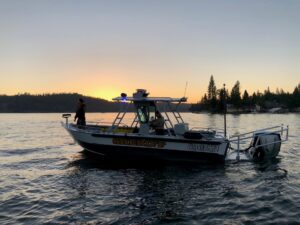
Among the most critical safety measures is the use of personal flotation devices (PFDs).
Children 13 and under are required to wear a Coast Guard-approved life jacket while aboard a vessel or participating in water activities.
Life jackets are also mandatory for anyone being towed or operating a personal watercraft. These requirements reflect one of the most basic truths of water safety: preparedness saves lives.
Zero Tolerance for Boating Under the Influence
Alcohol remains one of the leading factors in boating accidents nationwide, and Bass Lake is no exception.
Operating a vessel under the influence of alcohol or drugs is strictly prohibited and enforced under California law.
The Sheriff’s Office continues to prioritize education and enforcement around this issue, emphasizing that impaired boating carries consequences just as serious as impaired driving on the road.
Paddleboards, Fishing, and Shared Use
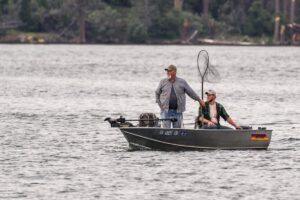 Beyond motorized boats, Bass Lake accommodates a wide range of recreational activities—including paddleboarding and fishing.
Paddleboards are legally considered vessels, meaning they must follow navigation rules and carry required safety equipment, including a life jacket and signaling device.
Fishing is another major draw, with Bass Lake supporting a variety of species and year-round angling opportunities.
However, these quieter activities often take place in the same spaces used by motorized vessels, making awareness and courtesy essential for all users.
The Most Important Rule
Despite the long list of regulations, the most important principle is one that cannot be enforced by citation alone.
Boating safety ultimately comes down to individual responsibility.
Operators are expected to remain vigilant, anticipate hazards, and take precautions beyond what is explicitly written in law. That includes watching for swimmers, adjusting speed for conditions, and making sound decisions in crowded or unpredictable environments.
A Shared Commitment to Safety
As summer begins and Bass Lake fills with activity, the responsibility for safety is shared by everyone on the water.
The presence of the Sheriff’s Boat Unit provides oversight and rapid response when needed. But the success of any safety effort depends on the choices made by individual boaters, families, and visitors.
With preparation, awareness, and respect for the rules, Bass Lake can remain what it has long been—a place where summer memories are made, safely.
Also Read:
Bass Lake and Southern Yosemite Reawaken for Spring