
YOSEMITE, CA – As of January 1, 2026, Yosemite National Park has instituted significant changes to its entrance fee structure affecting non-U.S. residents and international visitors. The new pricing regime, part of a broader National Park Service policy update, introduces a separate surcharge for non-U.S. residents and establishes a new tier of annual pass specifically for non-U.S. residents. The goal, according to federal officials, is to raise revenue for park infrastructure, maintenance, and visitor services while maintaining accessibility for U.S. residents.
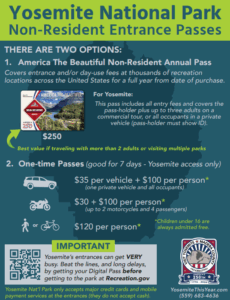
Under the revised fee structure, each non-U.S. resident aged 16 and older entering Yosemite National Park must pay a $100 nonresident surcharge in addition to the standard entrance fee, unless they hold a qualifying annual pass. This per-person fee is charged on top of the regular private vehicle or individual entry pass and applies to all eleven national parks identified by the National Park Service as requiring this surcharge — including Yosemite, Yellowstone, Grand Canyon, and others.
The standard entrance fee for a private non-commercial vehicle entering Yosemite remains $35 and is valid for seven consecutive days, with variations for motorcycles and pedestrians or cyclists. However, for non-U.S. residents, the total cost to enter with a vehicle can exceed $135, combining the base fee and the nonresident surcharge for each eligible visitor in the party.
To mitigate the impact of these surcharges, the National Park Service has introduced a new America the Beautiful Annual Pass for Non-U.S. Residents, priced at $250. This pass covers entrance fees and surcharges at Yosemite and other included parks for 12 months. It also covers up to two motorcycles and all occupants of a private vehicle or specified inclusions for group entries, making it a potentially cost-effective option for families and groups planning to visit multiple parks during a trip.
According to the Visit Yosemite | Madera County tourism bureau, this new annual pass “provides the same park access as the resident annual pass” and eliminates the need to pay the $100 nonresident surcharge at the eleven designated parks. It is valid for a full year, offering unlimited entries during that period.
Officials emphasize that the new fee rules do not apply to U.S. residents holding a standard America the
Beautiful annual pass — which continues to be available at the resident price and covers entrance fees at Yosemite and other parks. Fee-free days for U.S. residents also remain in place, offering free entrance on specific national holidays. However, those fee-free days do not apply to non-U.S. residents unless they hold an annual pass.
Local Tourism and Gateway Community Concerns
The updated fee schedule has generated conversation and concern among local businesses and tourism stakeholders. Madera County and the surrounding gateway communities rely heavily on tourism dollars generated by visitors to Yosemite. The Visit Yosemite | Madera County visitor center in Oakhurst — a key resource for travelers seeking informational services, maps, and trip planning assistance — continues to support visitors planning Yosemite trips under the new fee structure.
Critics of the new fees argue that higher costs for non-U.S. residents could deter international visitation, which has been an important economic driver for communities around Yosemite. A news analysis of the broader national parks policy pointed out that non-resident visitors make up a significant share of visitors in peak seasons and contribute substantially to local revenues through lodging, dining, and tourism services.
Despite these concerns, officials from the National Park Service and tourism bureaus alike stress that the updated fees are necessary to support long-term park preservation and infrastructure improvements. Given the immense popularity of Yosemite — which attracts millions of visitors annually to iconic features such as Yosemite Valley, Giant Sequoia groves, and high Sierra trails — additional funds are seen as key to maintaining trails, roads, restrooms, and interpretive services in the face of increasing visitation pressures.
Visitor Experience Under the New Fee Structure
In practical terms, most non-U.S. residents will face a choice: pay the nonresident surcharge on individual park visits or invest in the $250 America the Beautiful annual pass, which can pay dividends for those visiting multiple parks or making multiple entries. U.S. residents, by contrast, continue to benefit from lower annual pass pricing and designated free entry days.
National Park Service officials also remind all visitors that Yosemite has moved to a more cashless fee collection system, accepting major credit cards and mobile payments only at entrance stations, a policy designed to improve efficiency and reduce delays at peak entry points.
For travelers planning a visit through the southern gateway, the Visit Yosemite | Madera County visitor center remains a valuable first stop for planning assistance, updated park information, and guidance on purchasing passes online or in person before arrival at the park gates.
Conclusion
The new non-resident entrance fees at Yosemite represent a substantial shift in how international and non-U.S. visitors access one of America’s most treasured national parks. While the policy aims to support enhanced services and preserve natural resources, its implications extend into gateway economies and visitor planning practices for 2026 and beyond. Sierra News Online will continue reporting developments and visitor impacts as further details emerge.
Advice From VYMC About Winter Travel In Yosemite