
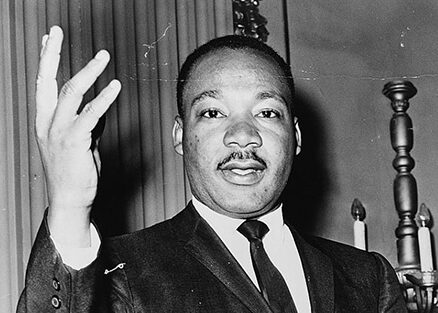
Each year, as the nation pauses to honor Dr. Martin Luther King Jr., we are reminded not only of a monumental figure in American history, but of a moral compass whose words continue to challenge us, lift us, and point us toward a higher version of ourselves. Dr. King did far more than lead a movement—he offered a vision for humanity grounded in dignity, compassion, and the belief that justice is not merely a political ideal, but a shared responsibility.
At the heart of his legacy is the unforgettable declaration spoken on the steps of the Lincoln Memorial in 1963: “I have a dream that my four little children will one day live in a nation where they will not be judged by the color of their skin, but by the content of their character.” More than 60 years later, those words still ripple through classrooms, living rooms, and public squares across America. They continue to inspire generations to pursue fairness, courage, and the conviction that every person carries inherent worth.
Dr. King’s journey began long before his name became synonymous with the civil rights movement. As a young pastor, he embraced the power of moral leadership at a time when the country stood sharply divided by race and inequality. His voice rose not from anger, but from a profound sense of justice rooted in nonviolence—a belief that confronting hatred with hatred would only deepen the wounds of the nation. Instead, he built a movement on the foundations of peace, truth, and unwavering resolve.
Through boycotts, marches, sit-ins, and tireless advocacy, Dr. King helped propel the nation forward through some of its most turbulent chapters. His leadership played a pivotal role in key civil-rights victories, including the Montgomery Bus Boycott, the March on Washington, and the passage of the Civil Rights Act of 1964 and the Voting Rights Act of 1965. Though these moments are often framed as political achievements, they were rooted in something much deeper: ordinary people choosing extraordinary courage.
That courage is what made Dr. King’s message transcend time. He asked Americans not only to change laws, but to change hearts. His dream was not simply about civil rights—it was about human rights. It was about building a society where character, integrity, and shared humanity mattered more than difference. A society where a child’s future would not be limited by prejudice, where opportunity belonged to everyone, and where the measure of a person would be defined by who they are, not what others assume them to be.
Today, Dr. King’s dream continues to challenge us in meaningful ways. It calls us to reflect on our own character and the way we treat others in our daily lives. It asks us to be fair even when it is difficult, to be empathetic when it is easier not to be, and to stand up for what is right even when our voice shakes. His message reminds us that progress is not inevitable—it requires effort, intention, and a willingness to lean into discomfort for the sake of justice.
The holiday honoring him is more than a day off; it is a reminder of the obligation we share to move his dream forward. Acts of kindness, community service, advocacy, bridge-building, and simple decency all serve as threads weaving his vision into the fabric of modern life. Each time we choose respect over resentment, understanding over assumption, or compassion over division, we honor his memory in a meaningful way.
Dr. Martin Luther King Jr. taught us that dreams are powerful not because they are easy, but because they demand the best of who we can be. His life remains a testament to the power of moral conviction and the enduring belief that a nation can rise to meet its highest ideals. As we honor him this year, may we recommit ourselves to those ideals—and may we carry his dream into our homes, our workplaces, and our communities with clarity, courage, and hope.
For Dr. King, character was the true measure of greatness. For all of us today, his dream remains both an invitation and a challenge: to build a world where justice is universal, compassion is unshakable, and every person is valued not for their differences, but for the content of their character
The History of the Roads of Madera County Lecture